
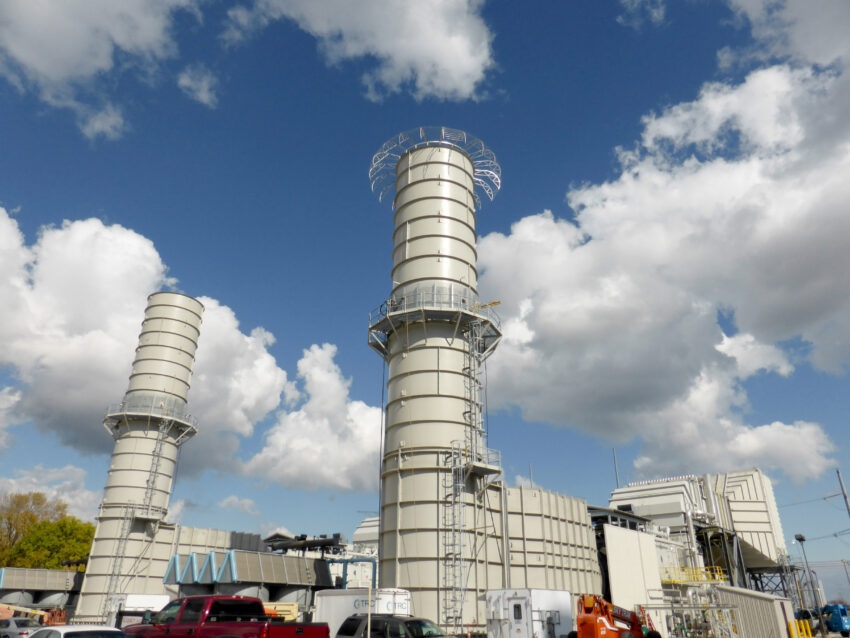
According to the latest federal data, the United States currently has just over one thousand peaking power plants in active service. Also known as peaker plants, these electric power generation facilities are designed to operate only during periods of high electricity demand.
Although simpler in infrastructure and more compact than traditional power generation facilities, peaker plants are among the most vulnerable to operational disruptions caused by direct lightning strikes and their secondary effects.
Peaker plants are particularly susceptible to lightning effects because they often include prominent structures such as exhaust stacks, transmission towers, and open-air substations, all of which act as likely lightning strike collection points. Within the facility, generating units, power transformers, switchgear lineups, control platforms, and communications networks operate under high electrical stress and are susceptible to transient overvoltage.
Even in areas with infrequent thunderstorms, severe lightning events can still occur, leading to catastrophic damage, injury, downtime, fines, and negative impact to corporate reputation.
The secondary effects of lightning are also significant. Ground potential rise and electromagnetic energy coupling into control and instrumentation cabling can disrupt plant functions or damage sensitive hardware where grounding, bonding, surge protection, and shielding are not in place.
For these reasons, peaker plants typically incorporate comprehensive lightning protection measures, including air terminals, low-impedance grounding grids and transient voltage surge protection devices. Lightning avoidance technologies may also be utilized, such as Charge Transfer technologies.
Due to the wide range of available technologies, mounting an effective defense against lightning-related threats typically requires a tailored strategy that integrates multiple solutions, each having its own specific purpose for minimizing damage or avoiding it altogether. The optimal combination depends on the specific site conditions and the nature of the operation.
According to Peter Carpenter, Director of Applied Engineering at Lightning Eliminators & Consultants, Inc. (LEC), the appropriate combination of solutions can only be determined through a comprehensive evaluation of each facility’s current protection measures, grounding systems, and overall risk exposure.
A pioneer in the field of lightning protection since 1971, LEC’s solutions protect critical operations and structures for some of the world’s most recognized companies, including Tennessee Valley Authority (TVA) nuclear facilities, Exelon, Constellation Energy, Duke Energy, and Consumers Energy, Federal Express, UPS, Marathon Petroleum, Chevron, ExxonMobil, and thousands of others.
By conducting a thorough site assessment, LEC helps facilities identify vulnerabilities and implement customized mitigation strategies, whether that means improving grounding, adding targeted surge protection, or implementing direct strike mitigation solutions.
For more information: call 303-447-2828; or complete the Free Lightning Risk Assessment For Critical Operations.