
Carbon capture initiatives are typically presented with a focus on new and emerging technologies. Behind each successful carbon capture, utilization, and storage (CCUS) project there exists a much less visible, but equally important, foundation upon which those projects depend: precise chemical composition measurement of gas streams.
For the power generation, cement, steel, refining, chemical, and hydrogen production sectors, CCUS represents a primary method to reduce emissions.
Each of these sectors generates a large volume and continuous flow of CO2 gases, creating ideal conditions for capturing these gases before they enter the atmosphere.
While the strategic and regulatory case for CCUS is increasingly well established, its successful implementation ultimately depends on precise process monitoring and control.
Process gas chromatography is an important analytical tool for CCUS used to continuously measure the chemical make-up of a gas stream flowing through industrial equipment. One of the most significant advantages of using gas chromatography is the ability to analyze a complex gas mixture and split it into individual components during a single measurement.
In carbon capture processes, large amounts of flue or process gases enter a capture unit. Therefore, it is imperative to be able to accurately separate and quantify the major components in the gas. However, one of the biggest obstacles in this regard is that different processing plants generate different gas mixes while operating under different pressures, temperatures and impurity levels.
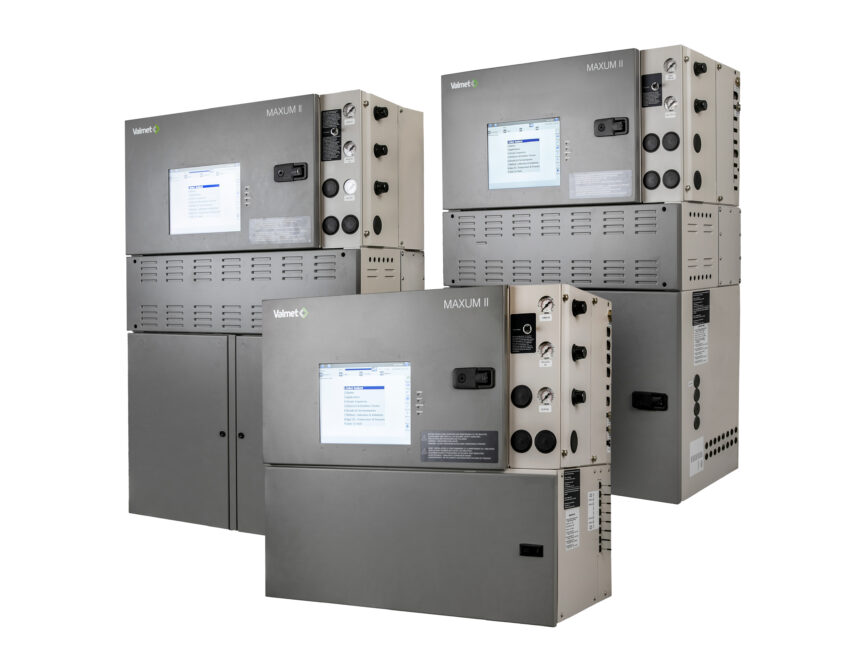
“The strength of gas chromatography lies in its ability to measure multiple components within a gas stream simultaneously, unlike individual gas analyzers that are limited to detecting a single component at a time,” says Al Kania, Business Development at Valmet, a global provider of technologies, automation, and services for process industries. Valmet’s process GC, MAXUM II, has a large installed base across process industries globally.
Guarding Against Analytical Drift
Although advanced analyzers like gas chromatographs are sophisticated, small measurement inaccuracies can lead to higher operational expenses or cause the control system to make unnecessary adjustments to the process.
This gradual shift in accuracy – known as analytical drift – is caused by variables such as temperature, detector deterioration, contaminants, and electronic stability issues.
The design and construction of the process GC is a factor in controlling drift. Industrial-grade products like the MAXUM II are designed to operate across a temperature range of -20 °C to 100 °C and should be rated for use in corrosive and potentially explosive atmospheres where hazardous gases may be present. Kania says the MAXUM II also utilizes real-time diagnostics to predict component wear, drift, or failure before it disrupts operations.
“With configurable detectors, one analyzer can perform a wide range of analytical measurements across multiple points in the CCUS value chain, minimizing the need for separate instruments and reducing long-term maintenance demands,” explains Kania, adding that the MAXUM II can be configured for a range of applications.
For more information about Valmet’s process automation systems, please visit www.valmet.com.