
Oil and gas facilities, including refineries, upstream/midstream operations, and petrochemical plants are among the most vulnerable to fires, explosions, and operational disruptions caused by direct lightning strikes and their secondary effects. Even in areas with infrequent thunderstorms, severe lightning events can still occur, leading to catastrophic damage, injury, downtime, fines, and negative impact to corporate reputation.
At oil and gas facilities, particularly at storage terminals and refineries, one of the most significant and well-documented risks is oil storage tank fires.
The most common type of fire in floating roof tanks is a seal fire, which results from a lightning-induced spark or a buildup of static charge igniting vapors near the tank’s rim seal. While these fires can typically be extinguished quickly with a foam system, the consequences remain significant. The affected tank must be taken offline, cleaned, and have its seals replaced, creating downtime and operational disruption for the terminal. Larger tank fires are less common but can burn for days, causing severe damage and making recovery much more difficult.
Floating roof tanks are particularly susceptible to fires resulting from lightning strikes. Electrical currents from such strikes can traverse the tank’s shell and roof, potentially arcing across the roof-shell interface. This arcing can ignite flammable vapors present near the floating roof seal, leading to catastrophic fires. Traditional bonding methods such as metal strips, known as “shunts,” have proven unreliable due to factors like corrosion, misalignment, and inherent design flaws, thereby increasing the risk of sustained arcs.
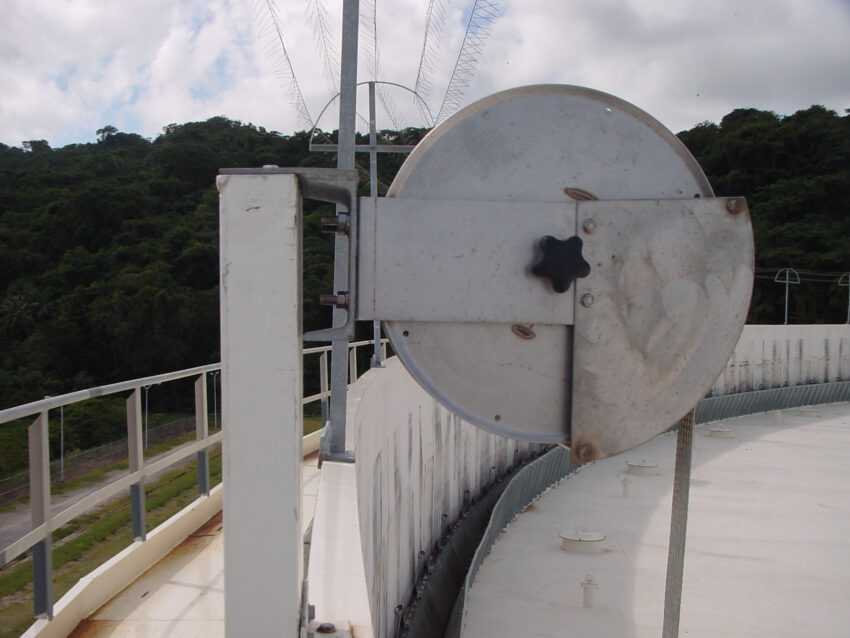
Proper bonding and grounding solutions are critical for prevention. As an example, the Retractable Grounding Assembly (RGA) is an advanced lightning protection device developed by Lightning Eliminators & Consultants, Inc. (LEC) to safeguard floating roof storage tanks from lightning-induced fires. This patented and ATEX-approved solution ensures a permanent, low-impedance bond between the tank’s floating roof and shell, preventing dangerous arcing and subsequent ignition of flammable vapors. Today, there are more than 17,000 RGAs in service globally.
The RGA conforms to both API 545 and NFPA 780 recommendations and criteria for a bypass conductor. API 545, issued by the American Petroleum Institute, addresses the risk of ignition caused by lightning strikes, particularly for above-ground storage tanks used in the oil and gas industry.
For more information: call 303-447-2828; email info@lecglobal.com; visit lightningprotection.com; or write to Lightning Eliminators & Consultants, Inc. (LEC) at 6687 Arapahoe Rd. Boulder, CO 80303, USA.